Table of Content
Both versions offer a variety of features, but there are some key differences that users should be aware of. Windows 7 Home Basic is the entry-level version of the operating system and does not include some of the more advanced features found in Windows 7 Home Premium. These include support for Aero Glass, Windows Media Center, and multiple language options. In addition, Windows 7 Home Basic is only available in certain markets. Windows 7 Home Premium, on the other hand, is a more full-featured operating system that includes all of the features found in Windows 7 Home Basic.
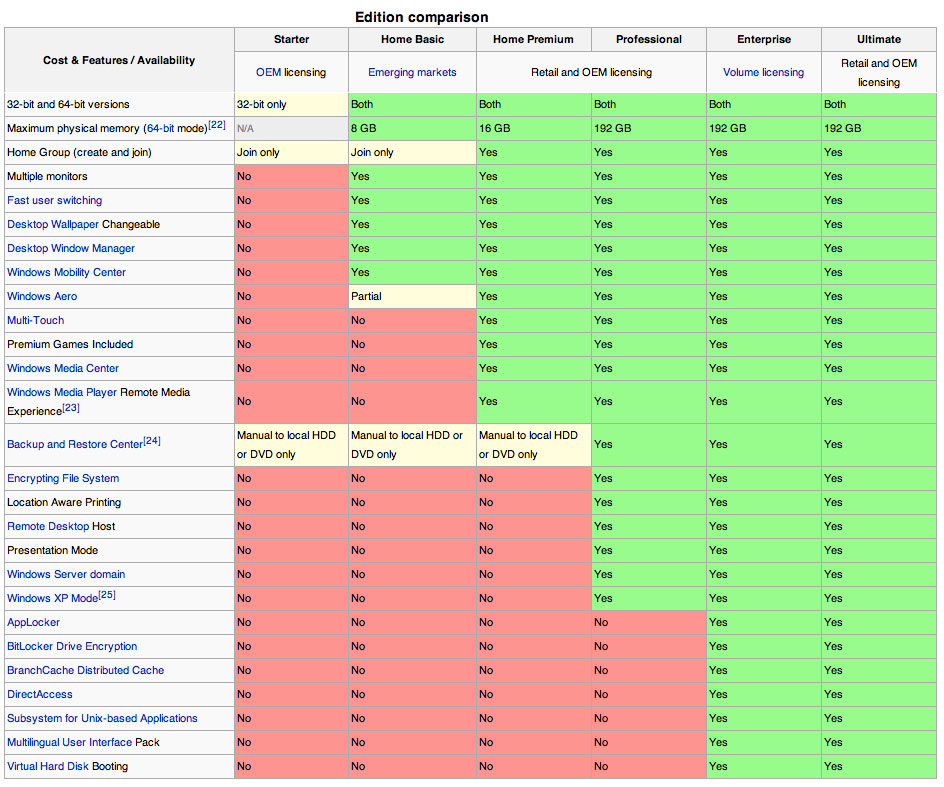
Four applications bundled with Windows Vista—Windows Photo Gallery, Windows Movie Maker, Windows Calendar and Windows Mail—are not included with Windows 7 and were replaced by Windows Live-branded versions as part of the Windows Live Essentials suite. With Windows 7, Microsoft has actually put together a basic feature set that makes sense across the board with a consistent upgrade strategy to move between versions based on your requirements and your budget. That is a first for the company and a huge improvement over Microsoft’s official Windows Vista feature list, which I once described as “practically incomprehensible ... Every edition of Windows 7 contains all features of the previous edition, eliminating artificial divisions between consumer and business features. Windows 7 Home Basic and Home Premium are two versions of the Windows 7 operating system.
Updates
It’s a simple way to link computers on your home network together so that they can share pictures, music, videos, documents, and printers. There is just a single password that is used to access the homegroup, making creating and accessing easy. From the home screen, you can easily view and connect available networks. First clicking on the Monitor icon then it displays a list of all networks, by clicking the right one and connecting using a username and password is very simple. For additional info, you also go to Networking and sharing center from here.

Also, the home version uses 400 MB of volume shadow space compared to 3.1 GB for the Ultimate. That difference is largely due to the fact that Windows 7 Home Premium comes with fewer features than the professional. Despite the difference in price, I cannot think of any one feature that ultimate has that home premium does not. Installing the preview rollup package released for Windows 7 on March 19, 2019, or any later released rollup package, that makes Windows more reliable.
Windows 7: The Six Versions Explained
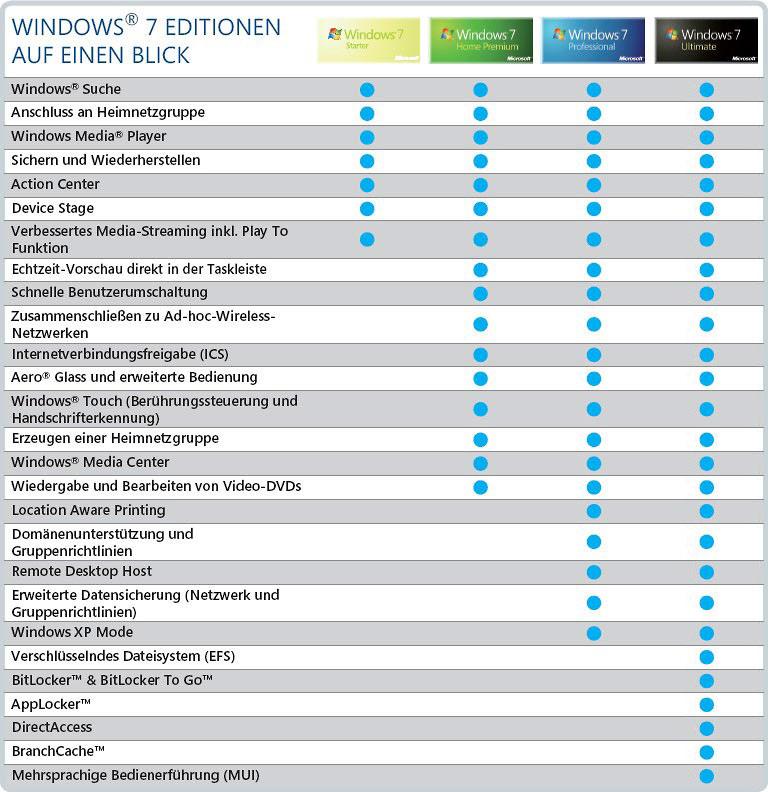
Windows 7 is available in six different editions, of which the Home Premium, Professional, and Ultimate were available at retail in most countries, and as pre-loaded software on most new computers. Home Premium and Professional were aimed at home users and small businesses respectively, while Ultimate was aimed at enthusiasts. Retail copies were available in "upgrade" and higher-cost "full" version licenses; "upgrade" licenses require an existing version of Windows to install, while "full" licenses can be installed on computers with no existing operating system. Among Windows 7's new features are advances in touch and handwriting recognition, support for virtual hard disks, improved performance on multi-core processors, improved boot performance, DirectAccess, and kernel improvements. Windows Security Center has been renamed to Windows Action Center , which encompasses both security and maintenance of the computer. ReadyBoost on 32-bit editions now supports up to 256 gigabytes of extra allocation.

Windows 7 Home Premium - This is still the same time-tested Windows 7 with its classic content that has conquered the whole world with its new interface for its time and relevance to this day, but this version differs only in that. In it, Microsoft has removed everything unnecessary, something that is not required for an ordinary user who does not need professional applications such as RDP, for example. On this edition, you can use everything the same as on other editions of Windows 7 older versions.
What programs came with Windows 7?
However, if you are looking for something that is more streamlined and easy to use, then Windows 7 Starter may be a better choice for you. Keep in mind that both of these versions of Windows have their own unique benefits and drawbacks, so make sure to do your research before making a final decision. In this blog post, we will take a look at the differences between Windows 7 Starter and Windows 7 Home Premium.

With the three-app limit now a non-issue, Starter edition should be a perfectly acceptable OS on small, cheap notebooks, regardless of how they’re used. I installed copies of each Windows 7 edition from the Release Candidate code on a single machine, resulting in a five-way multiboot system. Then I tallied up which features were in each edition, trying out each one to see if I could identify unexpected behavior. On the Windows side, many users just automatically assume that more is better. By that logic, Ultimate is obviously the best and lesser versions are inferior. Because they’re power users, they assume that Home Premium’s missing features mean they’re going to be lacking a feature they really need.
What is the difference between Windows 7 and Windows 10?
Windows 7 Starter is designed for basic computing needs, while Windows 7 Home Premium offers more advanced features for users who want more from their operating system. Windows 7 Home Premium (includes 32-bit & 64-bit versions) makes it easy to create a home network and share all of your favorite photos, videos, and music–you can even watch, pause, rewind, and record TV. It succeeded Windows Fundamentals for Legacy PCs, which was based on Windows XP Embedded. On January 14, 2020, Microsoft is ending support of Windows 7, which means you are no longer receiving security and patch updates from the company. We recommend you upgrade to Windows 10 to continue receiving security updates and technical support.

Not available through retail or OEM channels, this edition is distributed through SA. As a result, it includes several SA-only benefits, including a license allowing the operating of diskless nodes and activation via Volume License Key . If you are looking for the best gaming experience, you may want to choose Windows 7 Home Premium. This version includes the largest language support and is perfect for gaming.
The main difference is that Windows 7 Home Basic does not include features like Media Center, DVD playback, or BitLocker. If you are looking for a basic operating system with all the essential features, then Windows 7 Home Basic is right for you. REMOTE DESKTOP HOST Every edition of Windows 7 includes the Remote Desktop client, which allows you to connect securely to a Windows machine that has been configured to allow access. To make your machine available for incoming Remote Desktop connections, you must be running Professional or Ultimate edition. Rather, it’s strictly designed to help you see whether you need one or more unique features from the Professional and Ultimate editions or whether the mainstream Home Premium edition will meet your needs. When Apple defenders appear in the TalkBack section here, they regularly insist that the Home Premium edition is “crippled” and “stripped-down.” Sooner or later, they insist, any self-respecting Windows user will have to upgrade.

Both versions are eligible for Extended Security Updates for up to 3 years after their end of extended support dates. In addition, binary identical for Embedded Systems variants of Professional and Ultimate editions are also available, differing only in licensing, and with their support periods also matching their non FES variants. An in-place install (labelled "Upgrade" in the installer), where settings and programs are preserved from an older version of Windows. This option is only sometimes available, depending on the editions of Windows being used, and is not available at all unless upgrading from Windows Vista. It is mainly used to give access and manage users with specific applications.
In comparison to Home Premium, Starter has reduced multimedia functionality, does not allow users to change their desktop wallpaper or theme, disables the "Aero Glass" theme, does not have support for multiple monitors, and can only address 2GB of RAM. Home Basic was sold only in emerging markets, and was positioned in between Home Premium and Starter. The highest edition, Enterprise, is functionally similar to Ultimate, but is only sold through volume licensing via Microsoft's Software Assurance program. LANGUAGE PACKS Here’s a confusing feature primarily of use for multilingual speakers. For Ultimate/Enterprise editions only, you can install Multilingual User Interface packs that encompass the entire interface.
Based on worldwide data taken during June 2010 from Windows Update 46% of Windows 7 PCs run the 64-bit edition of Windows 7. According to Stephen Baker of the NPD Group during April 2010 in the United States 77% of PCs sold at retail were pre-installed with the 64-bit edition of Windows 7. On October 21, 2010, Microsoft announced that more than 240 million copies of Windows 7 had been sold. Three months later, on January 27, 2011, Microsoft announced total sales of 300 million copies of Windows 7. On July 12, 2011, the sales figure was refined to over 400 million end-user licenses and business installations. As of July 9, 2012, over 630 million licenses have been sold; this number includes licenses sold to OEMs for new PCs.
Moreover, the latest graphics platform from Microsoft, DirectX 11, will give you a realistic lighting and overall graphics in games. But remember that Windows 7 Starter doesn’t support multiple processor cores. And also without the Device Stage experience and custom software that PC manufacturers will install for many of their systems. As with the previous version of Windows, an N version, which does not come with Windows Media Player, has been released in Europe, but only for sale directly from Microsoft sales websites and selected others. In February 2020, Microsoft released an update via Windows Update to fix a black wallpaper issue caused by the January 2020 update for Windows 7.
As you may have guessed, there are plenty of freeware apps out there that could easily replace the functionality of Bitlocker. Windows 7 Professional, the middle class of the Windows versions, will run you approximately $299 for a full version, and $199 for an upgrade. As previously mentioned, Professional adds XP Mode, Domain Join, and network backup upgrades from Home Basic. If you are looking for a more versatile and powerful operating system, Windows 7 Home Premium is the better option.